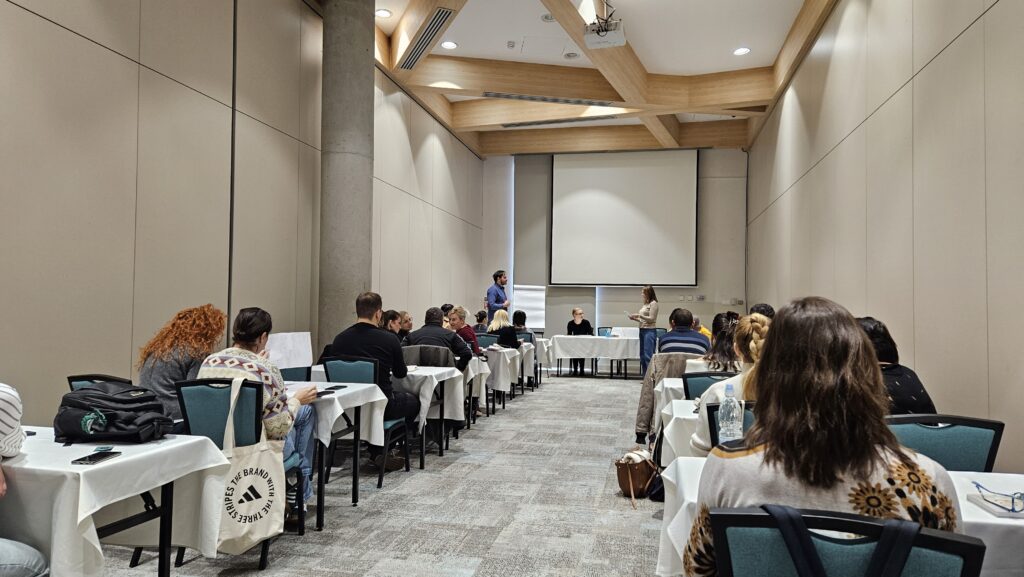
The main objective of the training was to strengthen institutional capacities for identifying funding opportunities and preparing high-quality project proposals. Participants gained in-depth insight into the structure of EU calls and embassy funding schemes, learned how to build a clear project logic, and practiced drafting concise and convincing applications for both European and domestic programs.
A distinctive feature of the course was its mentoring-oriented approach: beyond the seminar itself, participants received an additional 15-day post-training support period, ensuring continuity, quality, and real-world application of the knowledge gained.
Training Design and Learning Approach
The program was structured into three thematic blocks:
Block 1 – Introduction and Mentoring Framework
The opening session introduced participants to the CEUP mentoring team, outlined the seminar objectives, and explained the interactive working methods that would guide the following days.
Block 2 – EU Programs and Embassy Funds: From Logic to Draft Proposal
This central block focused on the European funding ecosystem — including Horizon Europe, Erasmus+, Interreg, and LIFE — alongside bilateral and embassy donors. Through lectures, case studies, and hands-on workshops, participants analyzed call documentation, developed logical frameworks, drafted concept notes, and reviewed examples of successful funded projects.
Block 3 – Domestic Funding Sources and Project Finalization
The final block concentrated on national and local funding schemes, budgeting procedures, and supporting documentation. Participants refined their proposals with mentor guidance and worked toward producing ready-to-submit project concepts aligned with public-sector priorities.
Teaching methods combined lectures supported by multimedia presentations, interactive discussions, case-study analysis, and practical problem-solving exercises, creating a highly participatory learning environment.